
Trace Oldham County Former Owners by Era
Start with the newest recorded deed you can tie to the same legal description. Its grantor is the immediate prior owner. Then repeat the step. Each earlier deed should yield another grantor, grantee, recording reference, and property description. The Clerk reports that courthouse records reach from the county's 1824 formation to the present. Online indexing and images cover less of that span. When a chain crosses the cutoff, move from eCCLIX to the Clerk's public office access, deed books, microfilm, or archival copies.
| Ownership source | Verified span | Access point | Best use |
|---|---|---|---|
| eCCLIX deed index and images | Index from 1980; deed images from 1915 | Account access online or free viewing at the Oldham County Clerk | Recent grantor, grantee, date, and recording-reference links |
| County deed books and KDLA microfilm | County records from 1824; series coverage varies | Clerk, Kentucky Department for Libraries and Archives | Earlier deeds, book and page references, and legal descriptions |
| FamilySearch Oldham catalog | Deed books 1824-1900; index through 1902 | FamilySearch catalog and associated film or digital access | Book-level discovery and older name indexing |
| Tax books, wills, and order books | Series-specific historic ranges | KDLA and the Oldham County History Center | Indirect ownership clues when no clean deed transfer appears |
Work backward through the Clerk's deed index for a twentieth- or twenty-first-century transfer. Older chains need different handling. Preserve the last known book and page before switching media. Tax rolls can place a name with land in a given year. A will or court order can explain an estate transfer. Neither substitutes for a missing deed. Label such evidence as a clue. A recorded conveyance or court document must close the link.
Former owners also hide behind business, trust, married, abbreviated, or misspelled names. Copy each party name exactly as indexed. Then test sensible variants without merging results too soon. A shared surname proves little. The tract description, adjoining owners, acreage, lot and block, and prior deed citation supply the stronger cross-checks. One deed may have conveyed several tracts. Identify which numbered tract holds the subject property. Only then add its grantor to the chronology.
Build the Oldham County Deed Chain Backward
Let a reverse chronology serve as the lead working document. Newer names sit in assessment tables. Earlier ones come only from deeds, so record each transfer on its own row and copy every legal-description clue the instrument offers. Retain gaps rather than joining two names by guesswork.
| Transfer date | Grantor to grantee | Instrument type | Recording reference |
|---|---|---|---|
| Newest verified date | Immediate prior owner to present grantee | Confirm it actually conveys title | Instrument number or deed book/page |
| Next earlier date | Earlier owner to the later grantor | Warranty, quitclaim, commissioner, executor, or other deed | Prior reference carried in the newer deed |
| Earlier verified date | Repeat one owner at a time | Preserve the instrument's exact label | Book/page, legal description, and source |
| Unresolved interval | Do not infer a party | Possible probate, court, or tax event | Mark the missing link and next repository |
The table is a research framework, not a sample parcel history. A valid Oldham County chain draws its names and references from the actual deeds. Other instruments crowd the books too. A mortgage, release, power of attorney, plat, or correction notice can appear between transfers. It changes no ownership at all.
Keep a separate source log beside the chronology. Note whether each date is execution, acknowledgment, or recording. Those are not interchangeable. Preserve the deed type and the exact consideration label as well. A family conveyance, correction deed, or nominal-consideration deed may not represent an open-market sale. Yet it can still be a vital link among former owners.
Oldham County Former-Owner Coverage Has Cutoffs
Coverage has edges worth knowing. The Oldham County Clerk Legal Records Department reports most courthouse documents from 1824 forward. Deed images run back to 1915. Deed indexing reaches back to 1980. Mortgage dates differ. Never use them as shorthand for deed coverage. eCCLIX demands credentials online. The Clerk, by contrast, offers free public viewing of indexes and images in the office. Its page shows the coverage context that governs where a search must move offline.
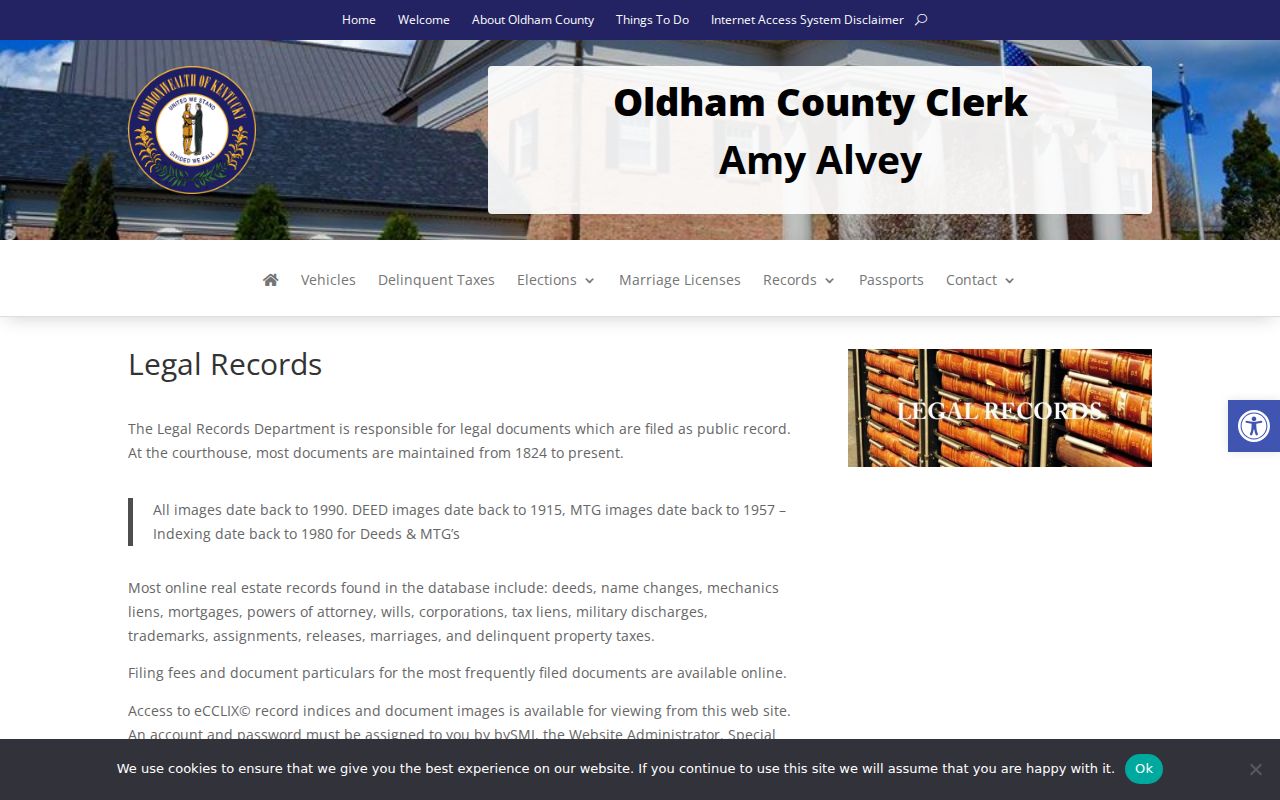
Cutoffs bite hardest at their edges. A pre-1980 name missing from an online index does not prove anything. The person may still have owned the tract. The search simply continues in the older index or deed-book system.
The Legal Records Department is at 100 W Jefferson Street, Suite 1, La Grange. Its published main number is 502-222-7645. Go in person. Office terminals expose public indexes and images that an anonymous web session cannot reach. Phone calls can confirm logistics. A staff answer still never replaces inspection of the recorded page. It is that page which names a prior owner.
Note: Verify office hours before travel; the Clerk lists different schedules by weekday and separate Crestwood and Goshen service offices.
Resident Access to Oldham County Previous Owners
Oldham residents can register for free personal, noncommercial searches. The catch is a five-search-per-day limit, and Oldham County is the only coverage. That rule should shape any long former-owner project. Plan the names and date ranges before spending a daily query, and use any prior deed reference first. Commercial subscriptions form a separate access path. Neither plan replaces free public viewing at the Clerk's office, and the Oldham resident eCCLIX signup shows the identity and address fields required to establish access.
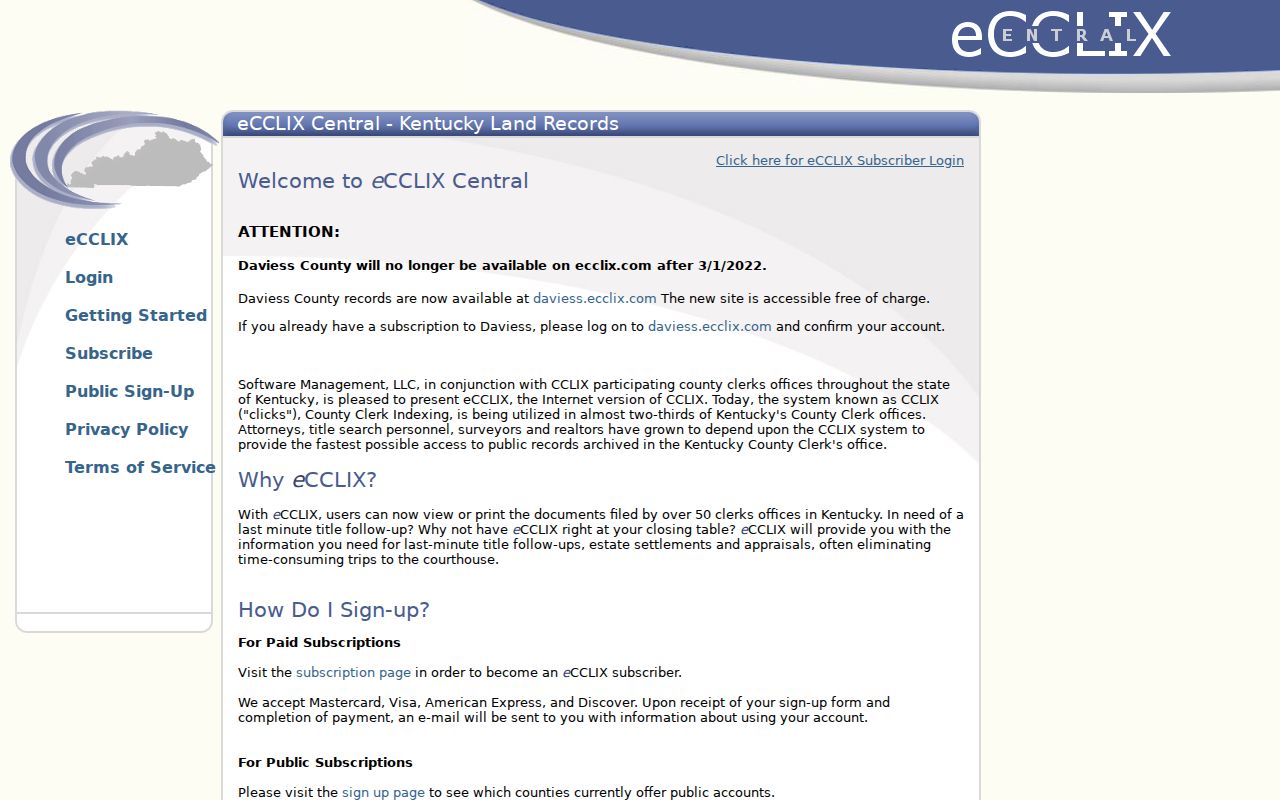
The signup screen is an account gate, not a deed result. Its address verification is not evidence about the property being researched. A focused query plan stretches the limited resident searches. Start with the exact grantor from the latest deed. Add an estimated acquisition period and any book/page reference already printed in the instrument. Save each result citation before moving on. If online access fails, documented alternatives remain. The Clerk's office, a specific Kentucky Open Records Act request for an identifiable record, and the historical repositories for older material all stand ready.
Read Oldham County Prior Owners in Reverse
Work backward from a verified deed. That is the safest way to trace prior owners of an Oldham County parcel. Start with one known instrument rather than a broad surname hunt. The grantee named there received the property. The grantor usually points to the next link in the chain. At each step, match the legal description, parcel clues, and any prior-instrument citation before accepting a name. The same person or business can appear in many unrelated Oldham County records.
- Locate the newest vesting deed and confirm that its legal description matches the target tract.
- Record its grantor as the immediate previous owner, plus its recording date and reference.
- Search that grantor as an earlier grantee, then compare acreage, lot, subdivision, and adjoining-owner language.
- Follow each stated prior deed reference; when digital coverage ends, carry the book/page trail into deed books or microfilm.
- Grantor and grantee
- The conveying party and receiving party named in a deed. Their roles can differ in non-sale transfers.
- Chain of title
- The linked sequence of instruments through which an interest passed over time.
- Reverse index
- An index organized from the grantor side, useful when moving backward from a known owner.
- Warranty and quitclaim deeds
- Different deed forms whose exact legal effect must be read from the instrument, not inferred from the label alone.
Follow the prior-reference clause instead of chasing every hit on a common surname. Deeds sometimes jump to an estate, a commissioner, or a family transfer. When that happens, pause the chain. Check probate, court, and tax records for the missing event. Add a former owner only after the parcel match survives this comparison. A similar name on a mortgage or lien proves nothing about title. Legal descriptions vary, too. One deed may use metes and bounds, a subdivision lot, or a parent tract rather than a modern parcel number. Acreage may have shifted through a split or consolidation. Document the parent-child relationship instead of forcing today's boundary onto every older conveyance in the Oldham County property records.
Oldham County Former Owners Before the Online Era
Oldham County was organized in 1824 from land taken from Henry, Jefferson, and Shelby Counties. That date matters for any property search. A deed trail can stop at the county line. The land itself may have changed hands earlier. The next step may sit in a parent county, not in a missing Oldham volume. The KDLA land-record inventory lists historic deed and tax series. The FamilySearch Oldham deed catalog covers deed books from 1824 through 1900 with an index through 1902. Citations should be reproducible. Record the repository, series, county, and volume. Note the date range, reel or film number, page or image, and any restrictions. A catalog entry alone is a collection lead, not proof that a named transfer occurred. At the 1824 boundary, first identify which geographic portion the tract came from. Then search that parent-county index under the same grantor, grantee, watercourse, road, and adjoining-owner terms. The parent record may describe a larger tract later divided. Preserve that change in scope. That way a historic owner of the parent acreage is never presented as owner of the exact modern parcel.
Oldham County Estate Transfers Break Owner Lists
Not every former owner appears in a simple buyer-and-seller sequence. A will can state an intended distribution without ever changing record title. Look instead for an executor's or administrator's deed. An affidavit of descent can also work. So can a court order, a commissioner deed, or a later deed from heirs. KDLA's county inventory places Oldham will material at 1824 and later. That is useful context when a grantor vanishes from the deed records. Keep allegations and outcomes separate when court files appear. A complaint or lis pendens signals a dispute. A judgment, sale order, commissioner report, and deed each mark a different stage. The chain stays incomplete until the parcel description and the final conveyance agree. A PVA name change can point toward the next record. But it is not a conveyance. The PVA itself explains that an official deed or will should be recorded with the proper office. It also notes that a death certificate may support an assessment-name change. For prior owners, note which system changed the name. Then locate the deed, probate, or court instrument. It should support the actual ownership event in the Oldham County property records.
Stop at a gap. Do not call an ownership chain complete when an estate, court, or unavailable deed leaves one transfer unsupported.
Place Names Reveal Oldham County Previous Owners
Modern street addresses make poor search keys for nineteenth-century land. Crestwood was called Beard's Station until 1909. An early Oldham County deed may cite a station or rail line instead of a house number. It may also cite a route, acreage, creek, or adjoining owner. La Grange's railroad references and older subdivision names create the same vocabulary gap. Search the historic place name with the owner name. Then compare acreage and adjoining owners before trusting a match. For subdivision research, the GIS subdivision fields offer a plat book, subdivision book, year, and plat link as a bridge. But confirm the recorded date and book/page through the Clerk. A planning or local-history narrative can point to a likely record. It cannot establish former ownership on its own. So anchor every link in the recorded Oldham County deed records.
Oldham County Archives Trace Former Owners
The Oldham County History Center maintains the J.C. Barnett Library & Archives and describes deeds and local records dating from 1824. Its family, cemetery, and local-history holdings help explain old surnames and property labels. The Oldham County Public Library eResources offer in-library genealogy access and Kentucky research tools. The library's Oldham Era archive can help date a sale, an estate notice, or a changed place name. Treat newspaper mentions and family files as supporting evidence. Cite them apart from the recorded instrument. Budget archive research, copies, and staff time separately from Clerk fees. Ask staff whether they can search a specific surname, tract, volume, or date range. Ask also what result they can provide. Historic tax books can narrow a transfer window. They show when one assessed name gave way to another on the tax roll. They help most before 1890. Still, the change may reflect an administrative update, estate handling, or a different parcel description. It may not reflect a sale. Use the suspected interval to guide searches in deed and order books. Former owners belong in the finished chain only when the record evidence in Oldham County supports the connection.
Note: Pre-1890 research may benefit from tax books, but a yearly taxpayer entry is not a substitute for a conveyance.
DOC ALERT Follows Oldham County Former Owners
Former-owner work looks backward. But a new deed or mortgage can still land after the history is finished. The Clerk offers free DOC ALERT enrollment for a person, business, or trust name. A filing triggers a notice. The service does not judge validity, remove a suspicious filing, or fix a title.
The Oldham County DOC ALERT service displays the enrollment fields. It also shows the county selection that governs notices.
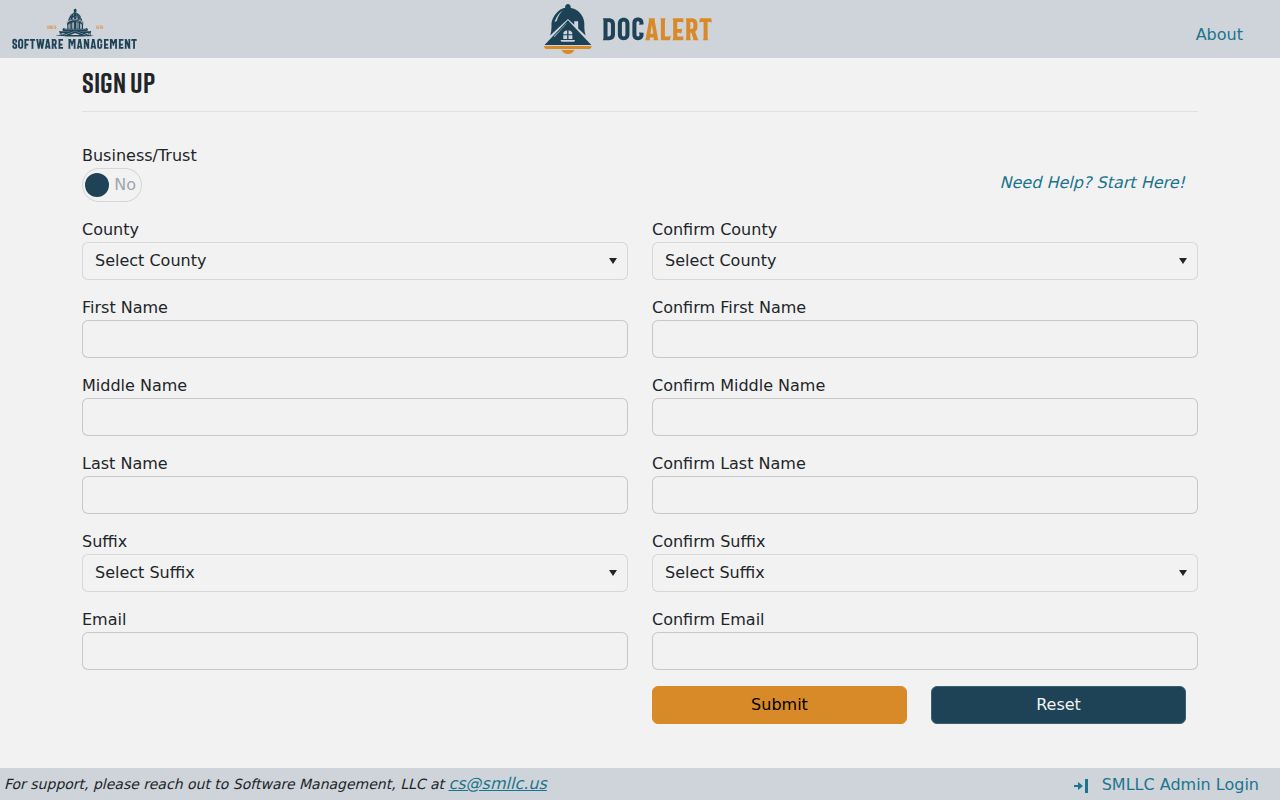
A notice should send you back to the Clerk for the instrument itself. Match its parties, legal description, and references against the verified chain before the chronology changes. Treat the alert as a prompt, not proof.
Timing matters. DOC ALERT works best once the former-owner research has settled which names and entities count. Enroll an overly common name and the noise multiplies. Skip a trust or business named in a deed and a relevant filing slips past.
Know Where Oldham County Former Owners End
Timing matters most. DOC ALERT works best after your former-owner research has settled. It needs to be clear which names and entities actually matter. Enroll a common name too broadly and you drown in noise. Skip a trust or business named in a deed. Do that and you may miss a filing that counts. A notice is never proof that a former owner reentered the chain. It is also not proof of fraud. It simply tells you a new Oldham County record exists and deserves inspection.
Lawful use. Former-owner research in Oldham County supports house history and property diligence. Never expose a protected Safe at Home address or use a chain to stalk, harass, or target a living person.
For one recorded instrument or certified-copy help, start with the Oldham County deed records guide. Legal rights may still turn on completeness or priority. A professional title examination may still be required.
The finished product should separate verified former owners from likely but indirect leads and unresolved names. Source and date every verified link. Keep a separate list of indexes searched without result. Negative evidence in one index says nothing about another era or spelling. That discipline yields a defensible property history. It does not claim more than Oldham County's surviving records can prove.
Before trusting the chronology, compare the first and last legal descriptions. Note every tract split or consolidation. Confirm no same-name party was borrowed from another parcel. Revisit shaky links at the Clerk counter or through a narrow records request. If the work supports a purchase, estate, easement, or boundary decision, hand the source log to the attorney, title professional, or surveyor on the case. The chronology organizes evidence. It cannot certify title or locate a legal boundary.