
A Practical Route Through Oldham County Property Records
Begin with whatever clue is already in hand. A street address, a current owner-of-record name, or an assessed value usually points to the Oldham County Property Valuation Administrator first. The GIS map turns a location into a parcel ID. From there, the Clerk links that parcel and owner to deeds, mortgages, releases, liens, and plats. The Sheriff holds the tax-bill side.
Timing explains why these sources must be read together. A PVA name can lag behind a freshly recorded deed, and the GIS Tax2022 table is openly a 2022 snapshot. A postal city, likewise, does not settle municipal or county jurisdiction. None of it is a title opinion. So compare the offices rather than trusting one screen.
- Normalize the street number, road name, postal city, and ZIP before searching.
- Use the PVA or GIS viewer to capture the parcel number and assessment record.
- Search the Clerk's eCCLIX index for the latest deed and its prior-record reference.
- Check the Sheriff's tax roll for the correct tax year and bill status.
- Request the document from its custodian when an image or older volume is not online.
The Offices Behind Oldham County Property Records
Function divides the work in Oldham County property records. The Clerk records legal instruments and keeps the index. The PVA assesses real property. The Sheriff collects taxes and posts bill-search help, while Planning and Development maintains the public parcel map. Knowing which office created a fact keeps one portal result from standing in for another.
Oldham County Clerk Legal Records
100 W Jefferson Street, Suite 1
La Grange, KY 40031
502-222-7645
Oldham County PVA
110 W Jefferson Street
La Grange, KY 40031
502-222-9320
Oldham County Sheriff Tax Office
100 W Jefferson Street
La Grange, KY 40031
502-222-9501
Oldham County Property Records in eCCLIX
Electronic land-record searching in Oldham County runs through eCCLIX. Searchers can query party names, document types, recording dates, book and page references, and instrument identifiers. Residents register for personal use at no charge. A five-search daily limit applies. Commercial users take a separate county subscription path. That gate matters when a search stops at an account wall instead of returning the document itself.
| Search clue | Best use | Check next |
|---|---|---|
| Grantor or grantee | Trace a transfer by party | Document image and prior reference |
| Book and page | Retrieve a cited instrument | Recording date and legal description |
| Document type | Separate deeds, mortgages, liens, plats, and releases | Related assignments or satisfactions |
The web account does not always show the image. The Legal Records Department is the direct route, by phone or at the courthouse complex. Certified copies come only from the Clerk.
Oldham County Property Records on the GIS Map
The Oldham County Planning and Development GIS viewer accepts an address, street, parcel, or subdivision query. Layers add zoning, planning, and political-district context. Its feature service lists fields like PARCELID and ACRES. A related Tax2022 table adds tax year, owner name, map number, location, legal description, and mailing address.
The year label matters most. A Tax2022 row can locate a parcel or check an old label, but it is not a current owner card. Confirm ownership through the PVA. Then pull the latest Clerk deed. Displayed lines orient a searcher but cannot settle a boundary dispute.
Why Oldham County ZIP Codes Can Mislead a Search
Postal geography can lie. Prospect sits in both Oldham and Jefferson Counties. ZIP 40059 proves nothing alone. A Goshen mailing address carries no more jurisdictional weight, nor does the name of the Clerk's Goshen service office.
Record three facts separately: the postal city, the city-limit status, and the county parcel jurisdiction. Trust the parcel polygon and county layer first. Turn to a city-limit or annexation record when city taxes, permits, or zoning matter. That step prevents an answer from the wrong custodian.
What Oldham County Property Records Document
No one record answers everything. A deed proves a conveyance. The assessment roll reports the PVA's value and owner snapshot, a tax bill covers a collection year, and a plat shows recorded lots and easements. Permit files trace applications and inspections; dates and source labels belong on every finding.
| Record Type | What It Documents | Kept By | Access |
|---|---|---|---|
| Deeds and releases | Transfers, parties, legal descriptions, prior references | County Clerk | eCCLIX or Clerk counter |
| Mortgages and liens | Recorded claims, assignments, and satisfactions | County Clerk | Index, image, or copy request |
| Assessment and tax | Assessed value, exemptions, districts, bills | PVA and Sheriff | Free basic search and tax portal |
| Plats and parcels | Lot, subdivision, acreage, mapped context | Clerk and Planning/GIS | Recorded plat and public viewer |
| Building and zoning | Applications, inspections, zoning actions | County or city office | Portal, office, or open-record request |
Reach for Oldham County deed records when recorded ownership or an encumbrance is the question. Collection details live in the tax records. Maps answer to plats and surveys.
How Oldham County Reviews Assessed Property
Kentucky law sets fair cash value as the standard. The Oldham County PVA reviews assessments each year. Physical examinations run on a four-year cycle. Free basic access shows ownership and assessed value, while subscription detail can add transfer history, sale search, photos, improvement characteristics, property class, and tax information.
A value field serves tax administration, not private appraisal. It is not a guaranteed sale price either. Exemptions can shift the taxable figure without moving the underlying assessment. For any current decision, note the assessment year. Ask the PVA to confirm any field the portal does not display.
Oldham County Tax Records Move Through Stages
In Oldham County, one tax bill moves through three offices. The PVA sets the assessment. The Sheriff collects the current tax. The Clerk handles filings for delinquent-tax sales. Timing also explains name mismatches. The PVA cautions that a deed recorded after January 1 may leave the buyer's name off that year's bill. Purchases before August 1 can appear in care-of form or miss the bill entirely. The Sheriff's tax search accepts a last name, street name, or bill number. It links to both current and previous rolls. A delinquent certificate never proves a sale. The same caution applies to any tax-sale list. Match the deed recording date, the assessment year, and the bill year. Then decide whether two records conflict.
Older Oldham County Property Records Begin in 1824
Oldham County property records start in 1824, the year the county formed from Henry, Jefferson, and Shelby Counties. Early tract research may cross a predecessor line. The Kentucky Department for Libraries and Archives inventories Oldham deed, tax-assessment, and will microfilm. FamilySearch catalogs deed books from 1824 through 1900. Its index runs through 1902. Local archives add depth. The J.C. Barnett Library and Archives at the Oldham County History Center holds deeds dating to the county's formation, plus family and cemetery material. The Oldham County Public Library contributes newspapers and research databases, including in-library access to Ancestry Library Edition. These channels reach where modern indexes stop.
Oldham County DOC ALERT Flags New Filings
The Clerk offers a free filing alert. Through the Oldham County DOC ALERT service, email notice goes out when a matching mortgage or deed enters the system. Registration is simple. A registrant enters a legal name, business, or trust name, plus county and confirmation details. The alert is an early-warning tool. It does not block recording or correct a title. Any notice should lead back to the Clerk's indexed instrument, where parties, date, document type, and legal description can be checked. A suspected fraudulent filing calls for preserving the record reference and using official legal or law-enforcement channels. Never confront a named party. The official Oldham enrollment page displays the actual registration fields.
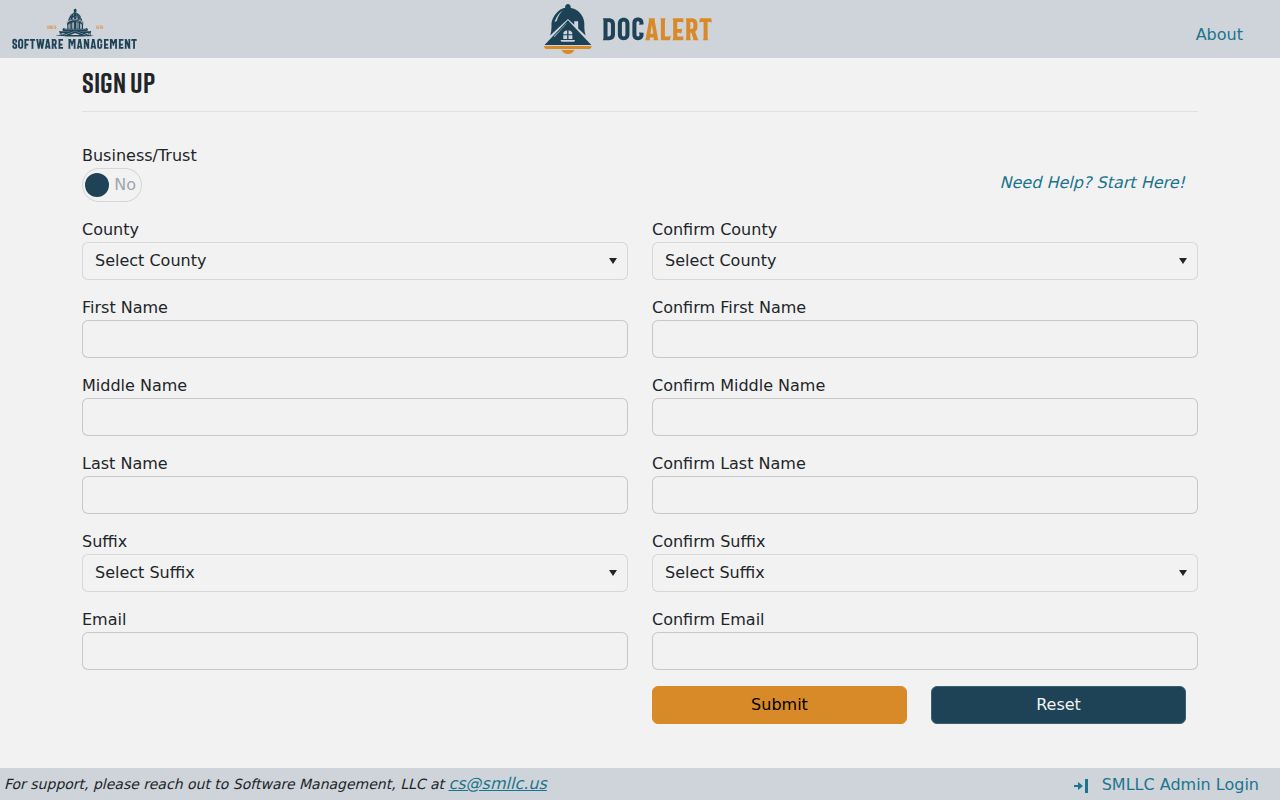
The service watches matching names. It does not validate title or establish that the filer owns a parcel.
Open Records Requests for Missing Oldham Property Files
A missing online record starts with its custodian. Clerk land records go to the County Clerk, tax collection files to the Sheriff, and assessment files to the PVA. Permit and planning files sit with the county or city department that created them. Oldham County publishes these custodian routes. The Clerk supplies its policy and the standardized OAG-01 form. Name the parcel or address. Add the record type and date range. A focused request beats a broad one. Kentucky's Department of Revenue guide allows five business days for a response and permits copy or programming charges in applicable cases. Lawful exemptions and redactions still apply. For a deed already indexed by book and page, request that precise instrument rather than every file tied to an address.
La Grange, Crestwood, and Prospect Leave Different Clues
City records add texture beyond county ownership files. La Grange research can start with the Central La Grange Historic District, Russell Court, and railroad-era plats. Current county planning files add more. Crestwood once went by Beard's Station. It adds Clorecrest, Briar Hill, The Maples, the onLAMA application catalog, and a ZoningHub map. Prospect contributes a city tax search, searchable code citations, and named neighborhoods. Permit requirements and current annexation ordinances round it out. None of this replaces the Clerk, PVA, Sheriff, or GIS. Municipal sources supply project names, permit dates, city-limit clues, and subdivision terms that carry back to official Oldham County property records. Prospect deserves extra care. The city straddles county lines. An Oldham-only result covers only the Oldham side of Prospect.
The New Judicial Center Changes Oldham Record References
Oldham County record references have shifted. The Judicial Center opened March 2, 2026. Dedication followed on April 30, 2026. Older sources may say courthouse when they mean the Judicial Center, a clerk office, or a court file. Current contacts point to West Jefferson Street. Keep the historical wording when citing an old source, then list the current office address for the courthouse complex separately. CourtNet and Kentucky Judicial Indexes can add party or case context to a foreclosure, probate, or property dispute. Their results are not a deed index. Cross-check a court record to a parcel through exhibits, legal descriptions, or recorded instruments, and keep a Master Commissioner judicial sale distinct from the Clerk's delinquent-tax sale process.
Limits That Apply to Oldham County Property Records
Oldham County property records answer many questions well. They name an assessed owner of record, trace a recorded deed, flag indexed encumbrances, tie a parcel to a tax year, and place the land on the map. What they cannot do is every job at once. No index promises completeness, a recorded conveyance is not a surveyed boundary, and nothing here substitutes for legal review of title. Keep source dates, missing links, and jurisdiction in view before drawing any conclusion.
Confidentiality rules also shape what appears. Kentucky Safe at Home shields certain addresses, and other state laws protect personal fields across deed records and tax rolls. A parcel polygon open to the public does not override those protections. If a residence is protected, stop there. Publish only what lawful property research truly requires.
Lawful use. Use these records for property diligence, boundary questions, tax review, house history, and civic transparency. Never use owner information to stalk, harass, threaten, or defeat a protected-address program.